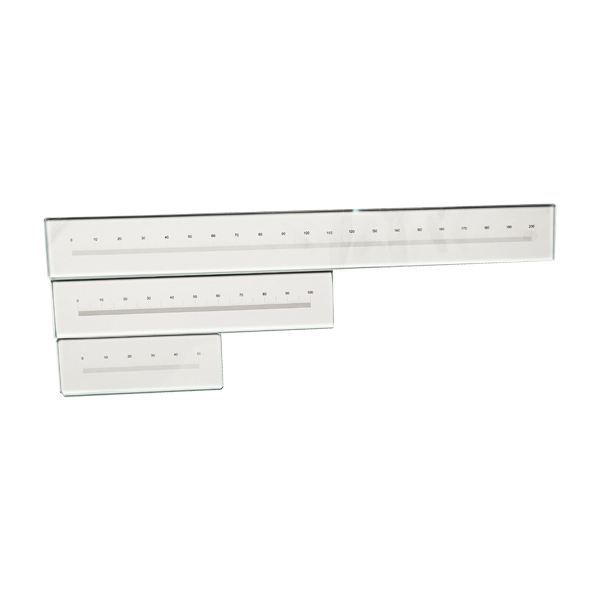
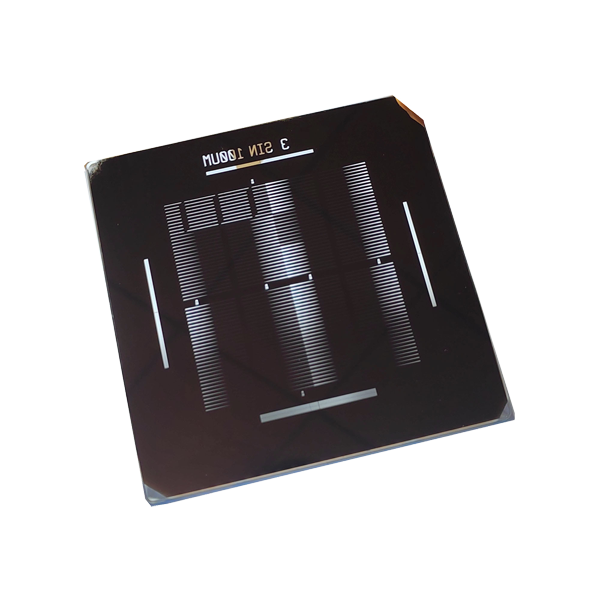
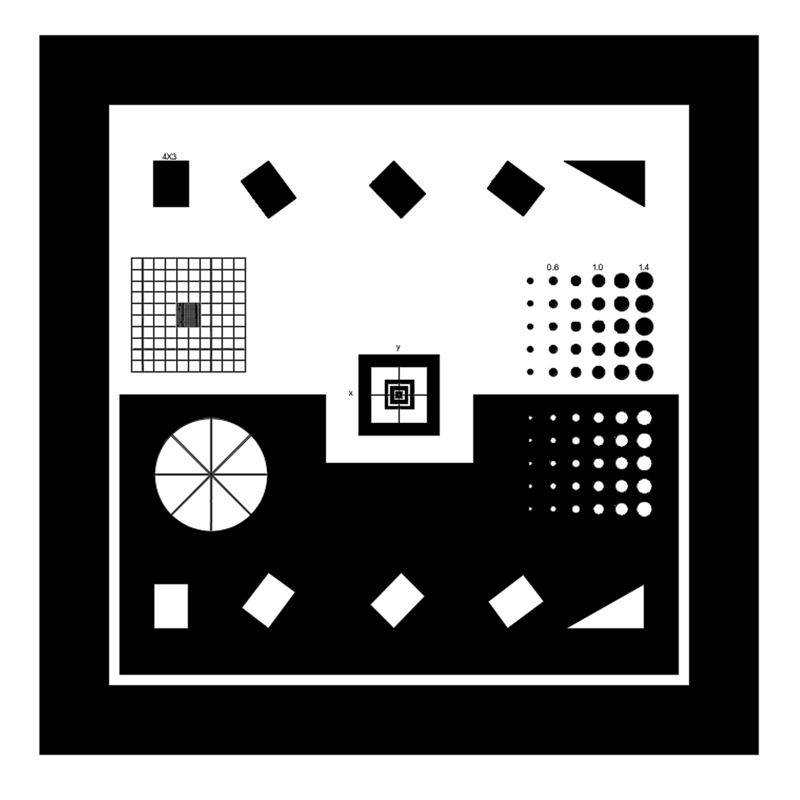
◆Case Study 1: Limitations of Cognition and the Cost of Cost In a certain project, a resource development colleague, in order to save a mere few hundred yuan in budget for testing fixtures, chose a low-cost solution with barely adequate accuracy. As a result, the fixture's insufficient accuracy led to distorted testing data, misleading subsequent mold revisions and repeated adjustments to the molding process. To save those few hundred yuan, the company ultimately paid thousands of times more in economic costs and needlessly delayed critical delivery dates. —This reflects that localized cost-saving without a holistic cost perspective is essentially a brutal plunder of overall profits.
◆Case Study 2: The Perfection of Software and the Cruelty of Reality Some optical design colleagues, despite years of experience, rarely visited the production site. Due to a lack of in-depth understanding of the positive and negative definitions of the testing coordinate system and the design coordinate system, they made a basic error of reversing the signs when deriving the mold equations. This design, "perfect" in Zemax simulation, instantly became scrap upon implementation. —This reflects that design detached from manufacturing processes is merely an untenable illusion.
◆Case Study 3: Lack of Sensitivity and Blind Spots in Foresight Sales personnel lacked technical sensitivity to even "minor" changes in customer specifications, causing the R&D team to waste time and resources in the wrong direction, leading to soaring R&D costs. Project managers, lacking technical expertise, were unable to identify risks in advance and could only scramble to address problems after they surfaced. This reflects that management lacking a technical background can easily turn profitable projects into loss-making quagmires. From Individual Cases to Common Issues: Human Logic is the Underlying Logic These cases are not isolated incidents but rather a shared pain point in the industry. They all point to a harsh reality: in the complex engineering chain of precision optics, "single-point thinking" at any stage can cause catastrophic fluctuations. Although the widespread adoption of AI has greatly lowered the barrier to knowledge acquisition and can even assist us in basic optimization, it can never replace the foresight, collaboration, and balancing of human beings throughout the entire chain. In this era of "equal access to manufacturing capabilities," the industry's demand for "multi-faceted" talents with a global perspective has never been more urgent than it is today.
I. Paradigm Shift: From "Single-Point Technology" to "End-to-End Collaboration"
In the past, a design engineer who could only draw Zemax diagrams or a tester who could only read interferometers could support a production line. But the landscape has changed:
◆ Deep AI Empowerment: Basic optical design and simulation are being accelerated by AI algorithms, diminishing the value of mere "draftsmen" and "software operators."
◆ High Supply Chain Transparency: The homogenization of hardware capabilities has shifted the key to success for companies to system-level integration. Experts from major companies generally believe the industry is facing several talent shortages: "Chief Engineer" System Talent: As acquiring knowledge becomes easier, the key lies in how to apply that knowledge to solve trade-offs in complex systems. The industry urgently needs system architects who can coordinate optics, mechanics, electronics, and algorithms. Management Personnel Who Understand R&D but Are Not Obsessed with it: Many technology companies easily fall into the trap of "technology-only" thinking. The industry urgently needs managers who understand the underlying logic, can communicate with R&D, possess keen business acumen, are not obsessed with piling up performance metrics, and can drive product definition with a "market success" orientation. High-level talent with business acumen and R&D management capabilities: These individuals are the "ballast" of a company. They possess business acumen, able to assess R&D investment from the perspectives of financial indicators and delivery cycles, while also having strong R&D management skills to guide the technical team towards commercialization and prevent the waste of R&D resources. R&D personnel knowledgeable in lean manufacturing: R&D is not just about running data in software; it requires understanding cost control and Design for Manufacturability (DFM) to ensure efficient and high-yield product deployment. Production personnel who understand R&D logic: Production lines don't lack operators; what they lack are "new craftsmen" who can understand design intent, proactively report process bottlenecks, and digitize the production line.
II. Industry-Education Integration: Breaking Down the Barriers of "Theoretical Talk"
The talent gap stems from a disconnect in training models. It must be objectively recognized that current school curricula are severely out of sync with innovative industrial projects. Complex engineering problems encountered in real-world environments often involve multi-variable coupling; even simply breaking down and understanding the problem can be challenging for some teachers who have long been detached from frontline work, let alone providing effective solutions. Traditional academic education often focuses on ideal models, while the allure and harshness of industry lie precisely in those "less than ideal" scenarios. How should schools cultivate talent? They must break down the "walls" between campus and industry. We advocate inviting industry experts to schools for training, bringing real-world industrial projects into the classroom—for example, the environmental adaptability analysis of automotive LiDAR under complex lighting conditions, or the tolerance allocation and yield balancing of ultra-thin periscope lenses within limited spaces. Through deep collaboration between enterprises and schools, students can gain in-depth exposure to industrial-grade processing and testing processes before even leaving school. The core of this training model lies not in operating a particular piece of equipment, but in helping students understand that a successful optical product is the result of repeated trade-offs between physical limits, manufacturing processes, cost control, and business logic. Only by experiencing the constraints of a real industrial environment can students develop the professional intuition to bridge the gap between "theoretical parameters" and "engineering practice."
III. Internal Strength of the Enterprise: Establishing an Evolutionary Ladder from "Employee" to "Expert"
For businesses, talent isn't something you "recruit," but rather something you "cultivate." Leading companies should focus on building "corporate universities"—not just training rooms, but a systematic knowledge-harvesting mechanism.
◆High-quality vocational skills training: Develop standardized, practical courses targeting core areas such as optical assembly and precision testing.
◆Professional ethics training: Cultivate engineers' project management skills, cross-departmental communication abilities, and business acumen. Only by building an internal "hematopoietic stem cell" system can a company remain invincible amidst technological iterations.
IV. Personal Advancement: Becoming a "Multifaceted" Individual in Your Career
As individuals caught in the tide of change, only evolution ensures survival. Future opticians will no longer be cogs in a machine, but must evolve into "multifaceted" individuals:
◆ Horizontal cross-disciplinary professional skills: Breaking away from the "everyone sweeps their own doorstep" mentality. Designers must deeply understand processing boundaries and high-precision detection principles, while assemblers must comprehend mechanical structure mechanics and stray light suppression. Only by understanding the constraints of upstream and downstream processes can optimal decisions be made in one's own role.
◆ Vertical in-depth exploration of professional ethics and business dimensions: Enhancing the ability to solve complex systemic problems, cultivating sensitivity to industry trends and cost structures, and achieving a leap from "technical execution" to "value creation."
In conclusion, the future of precision optics lies not only in the precision of lenses, but also in the breadth of human capabilities. As high-end optical manufacturing moves towards intelligence and integration, breakthroughs in a single环节 (link/stage) are no longer sufficient to drive industrial upgrading. True core competitiveness comes from the deep integration and efficient collaboration across the entire "design-processing-testing-assembly" chain.
We use cookies to offer you a better browsing experience, analyze site traffic and personalize content. By using this site, you agree to our use of cookies.Privacy Policy