About Us

  • Ningbo Zhixing Optical Technology Co., Ltd.
    Ningbo Zhixing Optics Technology Co., Ltd. is a national high-tech enterprise specializing in high-end wavefront inspection and computational holography (CGH) customization. The company's core R&D team comprises several PhDs with extensive industry experience in ultra-precision optics, possessing profound expertise in ultra-precision machining, inspection algorithms, and systems engineering. As a leading player in China's ultra-precision inspection market, Zhixing Optics boasts full-stack capabilities, encompassing wavefront phase calculation, complete CGH machining, optical system calibration, ultra-precision mechanical design, and software algorithm development. Its core CGH products comprehensively support high-precision inspection of high-order aspherical surfaces, off-axis aspherical surfaces, freeform surfaces, cylindrical surfaces, and tire surfaces, and are widely used in off-axis three-mirror optical system assembly and transmission wavefront inspection, achieving nanometer-level accuracy (RMS < 1nm) and a deterministic improvement in processing yield. Currently, the company's technical solutions are widely applied in key areas such as commercial aerospace satellite payloads, semiconductor lithography systems, and high-end automotive optics. Adhering to the philosophy of "excelling at cutting-edge technology and achieving precision," Zhixing Optics is committed to creating a digital closed loop "from extreme measurement to ultra-precision manufacturing," making ultra-precision testing simpler and providing global customers with high-determinism ultra-precision optical solutions.
    View More
    about

Send Inquiry

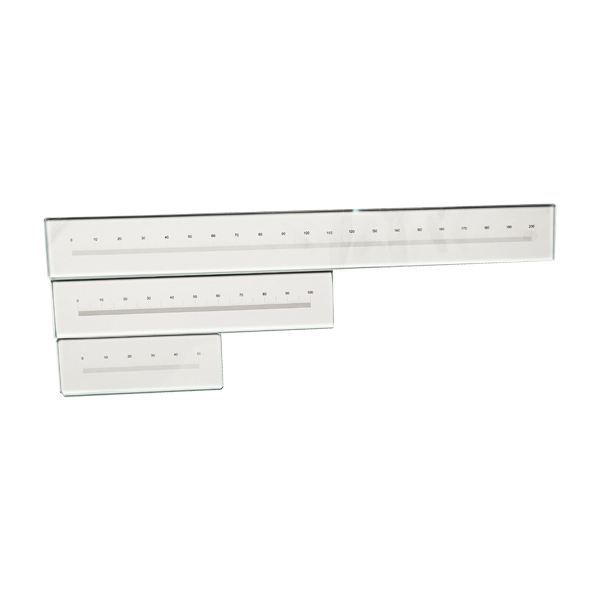
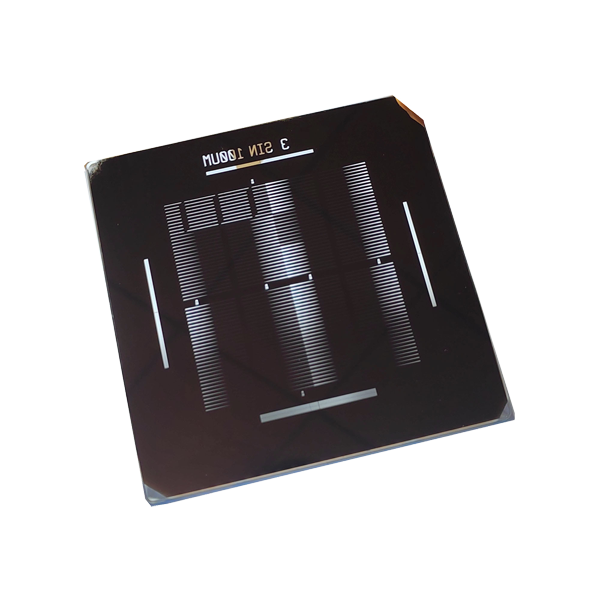
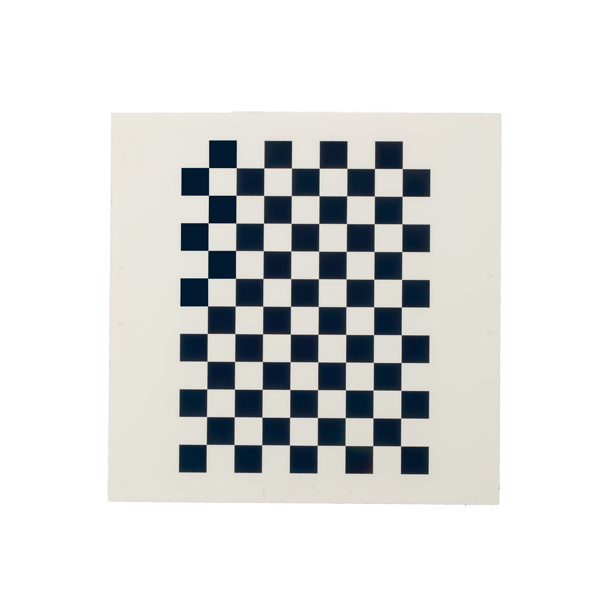
For inquiries about Machine Vision Calibration Board, Optical Glass Line Ruler, Photomask or price list, please leave your email to us and we will be in touch within 24 hours.
Inquiry Now

News

  • 08-20
    2026
    Industry News
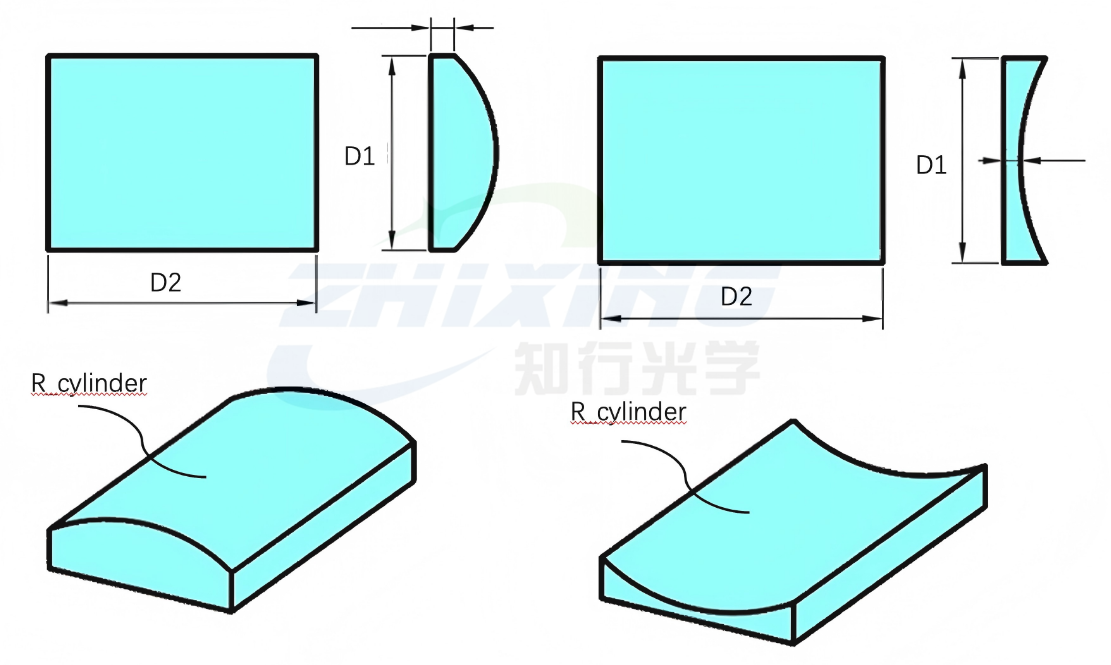
    Cylindrical CGH Selection Guide | How to Select a CGH for Concave/Convex Cylindrical Lens Inspection?
    Cylindrical mirrors are widely used in laser shaping, spectroscopic instruments, photolithography, and imaging optics. High-precision surface shape detection of cylindrical mirrors largely relies on cylindrical CGHs (computational holographic elements) for null-point interferometry detection. Cylindrical mirrors are divided into concave and convex types, and the selection constraints for CGHs differ between them. Incorrect selection can lead to problems such as incomplete wavefront coverage, inability to position the optical path, and failure to complete null-point detection. It can also directly result in incorrect CGH procurement, wasting time and money for the company. Today, we break down the complete selection logic for cylindrical CGHs to help you avoid common pitfalls.
    View More
    Cylindrical CGH Selection Guide | How to Select a CGH for Concave/Convex Cylindrical Lens Inspection?
  • 06-29
    2026
    Industry News
    Aspherical Surface Inspection Enters the Second Era: How Does Efficiency Define the Lifeline of Qualitative Change in Future Optical Manufacturing?
    Peter Drucker, the father of modern management, famously said a business and engineering rule: "If you can't measure it, you can't improve it." In the field of precision optical manufacturing, this rule is equally cold and ruthless: in the aspherical surface processing industry, if you cannot perform precise and efficient metrology and measurement, you simply cannot quickly and effectively improve the aspherical surface processing technology.
    View More
    Aspherical Surface Inspection Enters the Second Era: How Does Efficiency Define the Lifeline of Qualitative Change in Future Optical Manufacturing?
  • 06-26
    2026
    Industry News
    U.S. military standard 11 sets (3500 line pairs) of ultra-high resolution test targets: a key verification standard for the true resolution capability of high-end lenses.
    As fields such as semiconductor inspection, industrial vision, and high-end microscopic imaging continue to advance towards higher resolutions, lens performance verification is facing new challenges. Many lenses, after wavefront testing during the R&D phase, exhibit excellent performance indicators; however, when actually installed in CCD or CMOS systems, the actual imaging results often fall short of expectations. Why? Because the final performance of a lens depends not only on the optical design itself but also on whether the entire optoelectronic system can truly "see clearly." This is precisely the key value of the USAF Resolution Target.
    View More
    U.S. military standard 11 sets (3500 line pairs) of ultra-high resolution test targets: a key verification standard for the true resolution capability of high-end lenses.
X
We use cookies to offer you a better browsing experience, analyze site traffic and personalize content. By using this site, you agree to our use of cookies.Privacy Policy