Mechanical Datum: The "Hard Currency" of Machining and Assembly To understand datum transfer, we must first understand one thing: in machining and assembly, mechanical datum is absolutely the protagonist. Let's start with machining. What positions the mirror during turning, grinding, and polishing? It relies on the mechanical positioning surfaces of the mirror body, the outer circular edge, the locating pin holes, and the mounting flange surface. During turning, the chuck holds the outer circle, using it as a datum for centering; during grinding and polishing, the mirror's bearing surface rests on the tooling table, which mates with the mirror body's positioning surfaces. Regardless of the process, the mirror's spatial position on the machine tool is ultimately determined by these mechanical datum surfaces. Now let's talk about assembly. What positions the mirror when it's installed into the mirror barrel or structural component? Again, it's the mechanical datum—the mounting flange surface mates with the end face, the outer circle and the inner hole of the mirror barrel are positioned, and the locating pins and pin holes determine the angular orientation. Once installed, it stays in place; the mirror barrel doesn't recognize your optical axis, only the mechanical surfaces. Machining and assembly use the same language: mechanical datum. They naturally share a common basis for communication. Where does the problem lie? It lies in the intermediate step of "inspection." How is the optical reference from the inspection stage transmitted back to the mechanical reference? What is the purpose of inspection? It tells the manufacturing process "where it's not good enough," and tells the assembly process "whether this mirror meets quality standards." But inspection uses a different language—the optical reference. The optical axis of the interferometer defines the inspection coordinate system, and the wavefront of the CGH defines the reference surface shape. The PV and RMS of the surface shape error are calculated under this optical coordinate system. Now the problem arises: how are the optical and mechanical references aligned? If they are not aligned, this absurd situation occurs: the manufacturing department grinds the mirror to the required surface shape according to the mechanical reference, and the inspection department confirms the surface shape meets the requirements under the optical reference, but the two "meets the requirements" do not refer to the same thing—there is a deviation between the optical and mechanical references. In the assembly stage, the mirror is installed according to the mechanical reference, but the optical system displays a completely different surface shape. This is the essence of the reference transmission trap: it's not that one is inaccurate, but that everyone is using their own ruler and then assuming they are measuring the same thing.

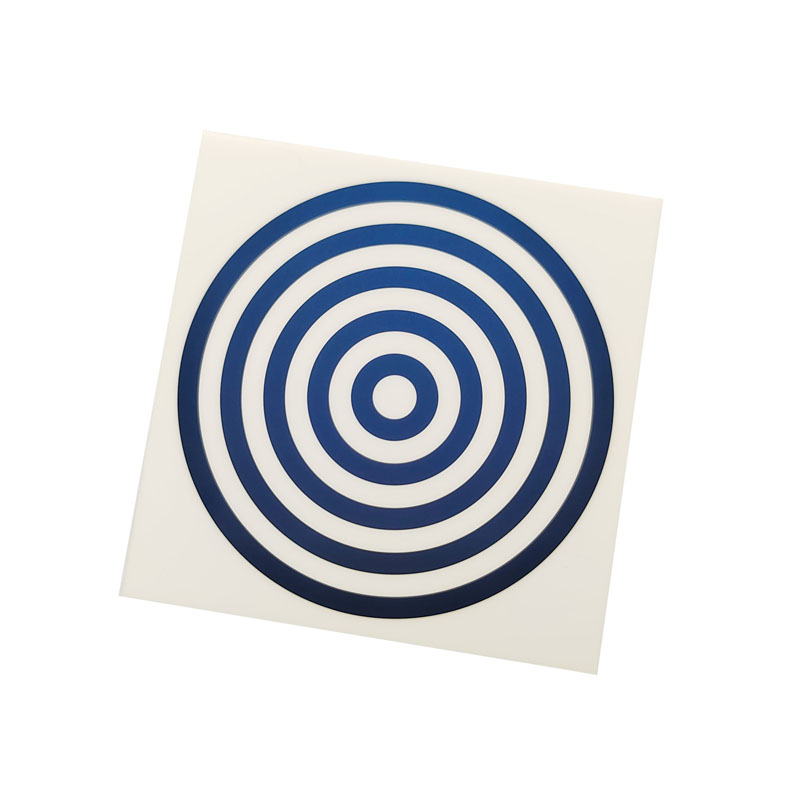
Figure 1. Four states between optical and mechanical references: perfect alignment, eccentricity, tilt, and eccentricity and tilt (from left to right).
Some inspection methods are inherently difficult to align with mechanical references, which raises a core issue: the difficulty of transferring optical references to mechanical references varies by orders of magnitude depending on the inspection method. For some inspection methods, the reference is "floating." Take, for example, the traditional mechanical probe profilometer. It scans the contours of a few lines on the mirror surface, achieving high data accuracy. However, its coordinate system is defined by the probe's motion guide rail. What is the relationship between this guide rail and the mirror's mechanical reference surface? Additional calibration is needed to establish this connection. Is the calibration accurate? Are there systematic errors? Every question mark represents a risk point in reference transfer. Another example is some sub-aperture inspection schemes based on splicing. Each splicing step introduces positional uncertainty, and the final overall coordinate system may have accumulated significant deviations from the mirror's true mechanical reference. These schemes share a common characteristic: the transfer link from optical to mechanical references has too many intermediate links. Each intermediate link is an entry point for error. CGH inspection offers a different approach: ensuring reference transfer is done properly during the design phase. How does CGH deliver the optical reference to the mechanical reference? A CGH used for testing typically consists of two functional areas:
◆ Main holographic region: Responsible for wavefront compensation, transforming the interferometer's standard spherical and plane waves into complex wavefronts that match the surface under test. This is the core function of surface shape detection.
◆ Alignment holographic region: Provides the absolute reference frame for the CGH itself relative to the interferometer, and ultimately relative to the mechanical reference of the mirror under test. It projects alignment features such as light spots, convergence marks, or cat's-eye patterns to confirm the spatial pose relationship between the CGH and the mirror under test.

Figure 2 Schematic diagram of each functional area of CGH
What does it mean that these two areas are integrated on the same substrate? It means the reference is no longer determined afterward, but is "written" into the CGH during the design phase. How is this transfer achieved? A clear spatial correspondence is established between the mechanical reference (positioning ball, reference edge, mounting flange surface) of the mirror under test and the reference markings on the CGH. Aligning the holographic area ensures that the mirror pose is the theoretical design value during each inspection, and ensures that this pose can be traced back to the mirror's mechanical reference. The transfer path from optical reference to mechanical reference is seamlessly integrated through the CGH design. What problem does this solve? It addresses the reality that in most cases, only the mechanical reference is recognized in the manufacturing and assembly stages. The assembly department doesn't care how beautiful the measured PV of your surface shape is. They only care about the mirror's performance in the optical system after it's installed according to the mechanical reference. The mechanical reference is provided by the manufacturing end, and it's also used by the assembly end—these two ends should be aligned. The inspection task is to ensure that your optical reference is as faithfully aligned as possible with this mechanical reference. Some inspection methods amplify errors at each stage of this conversion process. CGH's solution compresses the conversion process to the design stage—the relationship between the mechanical and optical references is defined during CGH design, and inspection simply involves reproducing this defined relationship. What are the consequences of a poorly executed conversion? The consequences are substantial.
◆Consequence 1: Incorrect surface correction. If a deviation is found in a certain area during inspection, the machining end will go back to correct it. However, if there is a tilt or offset between the inspection coordinate system and the mechanical coordinate system, the true location of this "deviation" is incorrect. The polishing tool, positioned according to the mechanical reference, is actually correcting a different location on the mirror. Result: The corrected area is not corrected, while the incorrect area is corrected.
◆Consequence 2: Repeated trial and error in assembly. The mirror's surface shape data looks good, but the image quality is poor after assembly. The assembly end starts adding shims, adjusting eccentricity, and correcting tilt—using mechanical means to compensate for the deviation caused by the conversion from an optical reference to a mechanical reference. What should have been a one-step process becomes endless trial and error. A question worth etching into your mind: Next time you see a surface shape inspection report, it's worth stopping to ask, "How is the data from this optical reference transferred to the mirror's mechanical reference?" If this transfer link is fully considered and defined from the initial design stage, the data is solid. If this link is pieced together afterward through calibration, algorithms, and tactile intuition, then all the nanometer-level precision figures may be built on loose soil. CGH provides the industry with more than just a hologram; it offers a complete solution that minimizes optical reference errors and transfers them to the mechanical reference during the design phase. The quality of the reference transfer determines whether the mirror can be installed successfully. And this is something that deserves to be done right from the start. Follow us for more technical interpretations and practical sharing on CGH and aspherical surface inspection. Have you encountered reference transfer problems in processing and inspection? Feel free to share in the comments section.







![[Ningbo Zhixing Optics Technology Co., Ltd.] invites you to attend the 2026 Shanghai Munich Optical Expo together!](/upload/7724/20260304090738470110.png "[Ningbo Zhixing Optics Technology Co., Ltd.] invites you to attend the 2026 Shanghai Munich Optical Expo together!")