I. The Invisible Surface Shape Killer: The Inescapable "Projection Distortion"
When discussing the precision correction of CGH (Computational Hologram), many colleagues easily confuse two concepts: one is the geometric distortion caused by the design of the optical path, and the other is the direct writing position error of the lithography equipment itself. In reality, these are two completely different "behind-the-scenes drivers."
Direct-write position error refers to the physical positional deviation caused by mechanical movement or coordinate stitching during nanoscale engraving in a lithography machine or electron beam direct-write stage. This tests the hardware capabilities of the manufacturing equipment.
The distortion we will focus on today exists entirely within the optical path design of the CGH.
When inspecting high-order aspherical or freeform surfaces, due to the large-angle, non-axial characteristics of the optical path design, the beam projected onto the CGH substrate naturally produces a geometric nonlinear stretching or compression similar to a "funhouse mirror." Once this design distortion exists, it will cause "spatial deformation" of the diffraction fringes on the CGH.
1. The Essence of Wavefront Transformation and Coordinate Transformation
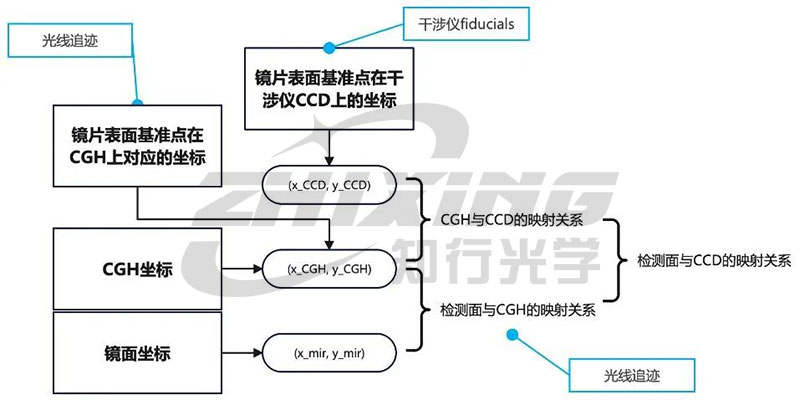
The core task of the CGH is to convert the standard spherical wave (or plane wave) output by the interferometer into a wavefront that perfectly matches the aspherical surface being measured. To achieve this complex wavefront transformation, a complex, nonlinear mapping relationship is formed between the individual pixels on the interferometer detector and their actual positions on the measured surface.
2. Visual Manifestations of Projection Distortion
This nonlinear mapping directly leads to projection distortion. In engineering inspection, it manifests visually as a distortion of the geometry of the measured component in the results. For example:
◆A mirror that is actually circular appears as an ellipse in the interferometric test results;
◆A mirror that is actually square appears as a trapezoid in the results.
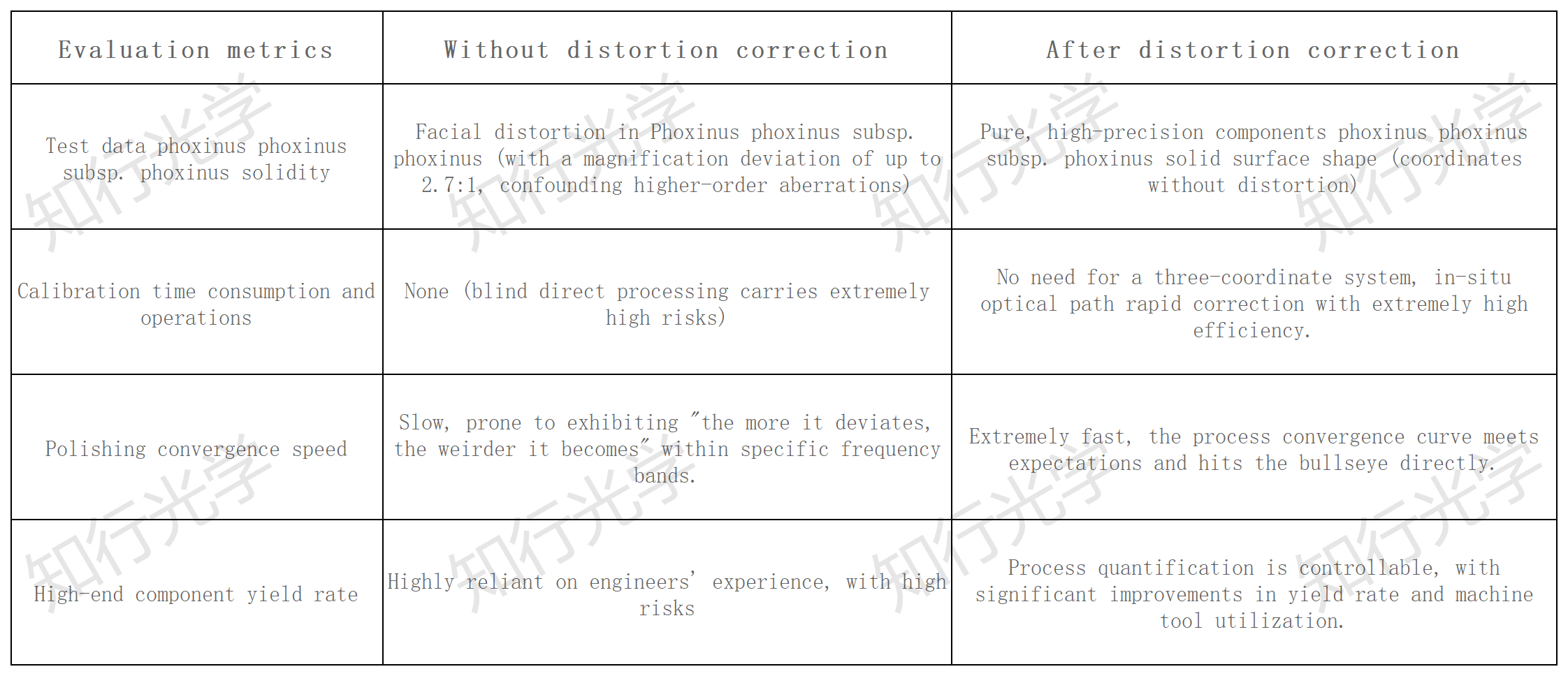
Quantitative Example: Studies show that for aspherical surfaces with large deviations, the "magnification deviation at different radial positions" caused by CGH imaging distortion can reach a maximum of 2.7:1! This magnitude far exceeds the tolerance range of ordinary optical components.
3. Fatal Negative Impact on Aberration Analysis
This distortion not only distorts the surface image, but more seriously, it transforms low-order aberrations into significant high-order aberrations. This means that the surface error analysis provided by the interferometer is fundamentally incorrect. Using this erroneous data to guide CNC polishing machine tools will lead to incorrect shape correction decisions.
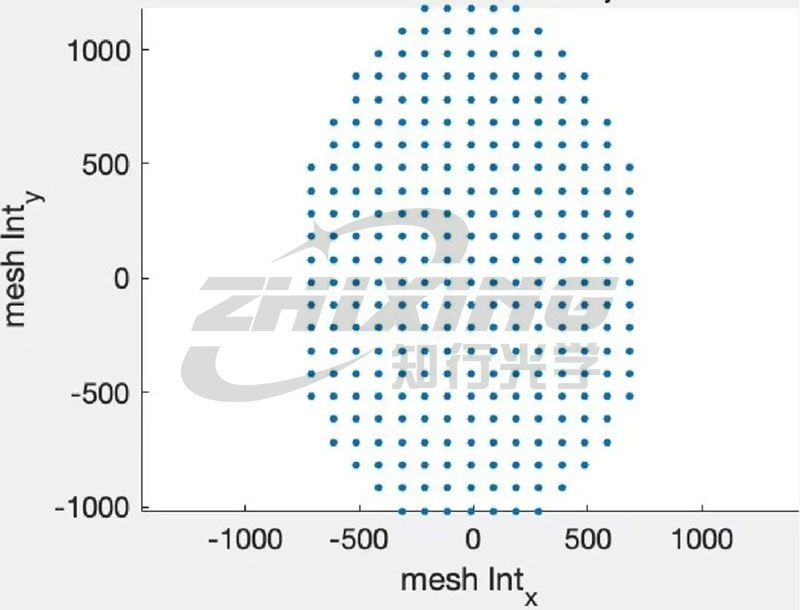
Interferometer detection of point distribution in a pattern
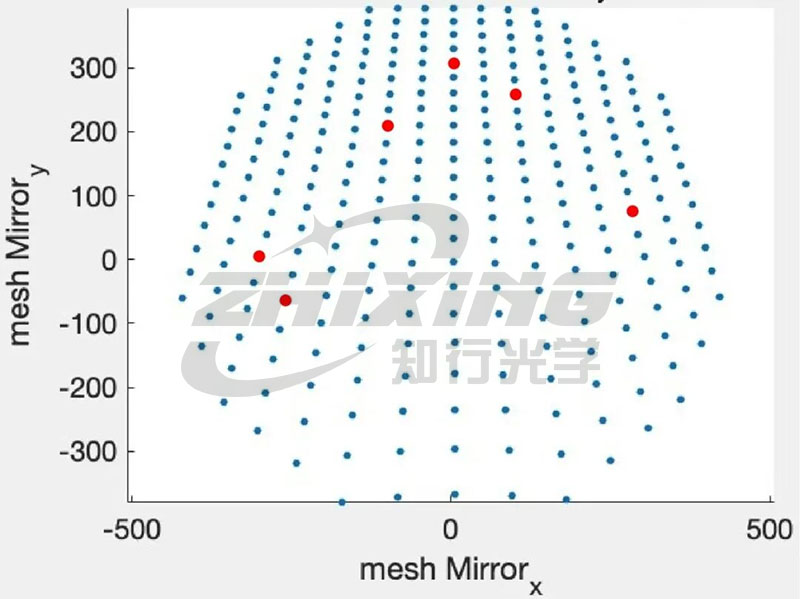
Point distribution on the aspherical surface to be measured
II. Rejecting Ineffective Polishing: Distortion Correction is the Only Key to Overcoming Bottlenecks in Aspheric Surface Machining
In ultra-precision manufacturing, uncorrected distortion at the source of inspection can trigger a fatal chain reaction:
1. Inability to Converge Surface Shape: Due to the introduction of higher-order aberrations, the error of components in specific frequency bands increases instead of decreasing with each polishing cycle, leading to a vicious cycle in machining.
2. Wasted Machine Time: CNC polishing machines spend a significant amount of time "repairing" non-existent, distorted errors, resulting in extremely low machine utilization.
3. Sharp Drop in Yield: For high numerical aperture (NA) aspheric surfaces or complex freeform surfaces, even minute geometric deformations can cause the entire optical system to fail to meet performance standards.
In short, CGH inspection without distortion correction only provides a distorted surface shape image. Only through rigorous distortion correction, thoroughly correcting the nonlinear coordinate transformation caused by physical principles, can the surface shape data measured by the interferometer be accurate. Only then can the machine tool "point and shoot" and achieve truly precise compensation.
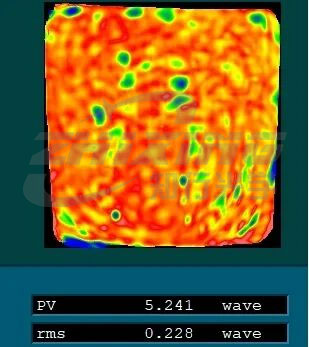
Test data before distortion correction (mirror is square).
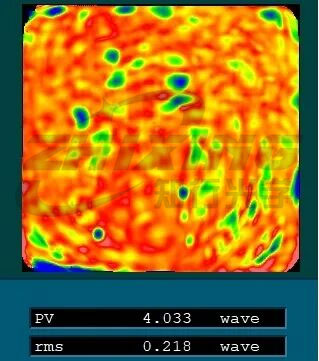
Test data after distortion correction (mirror is square).
III. Pursuing Absolute Precision While Also Striving for Ultimate Efficiency
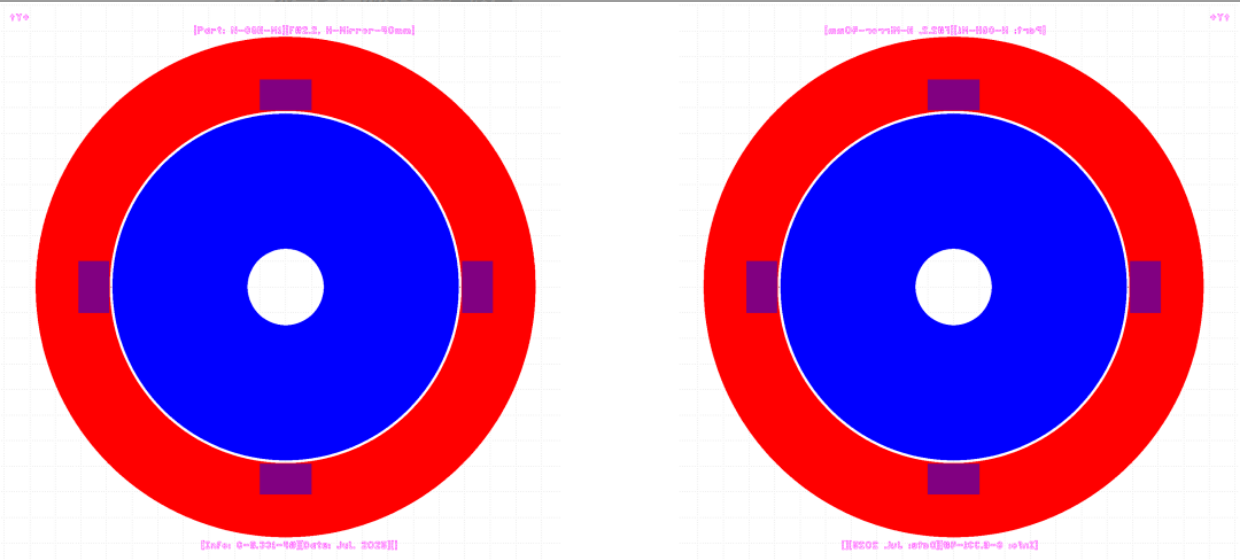
In the past, many optical manufacturers hesitated to implement distortion correction because traditional methods relied on high-precision coordinate measuring machines (CMMs) to measure each line and point individually. This not only required significant equipment investment but also involved a cumbersome and time-consuming testing process, with secondary clamping introducing new positioning errors. To completely resolve this industry pain point, we pre-reserved fixed-coordinate markers within the alignment area surrounding the main CGH area, and subsequently used advanced ray tracing algorithms for in-situ distortion correction. This upgrade fully integrates distortion correction into the daily inspection process:
◆ Eliminates the need for traditional CMMs, removing complex offline measurements and clamping errors;
◆ Direct geometric reconstruction based on ray tracing significantly improves inspection and correction efficiency while ensuring absolute correction accuracy, ensuring that high-precision aspherical surface inspection is no longer a bottleneck to production capacity on the production line.
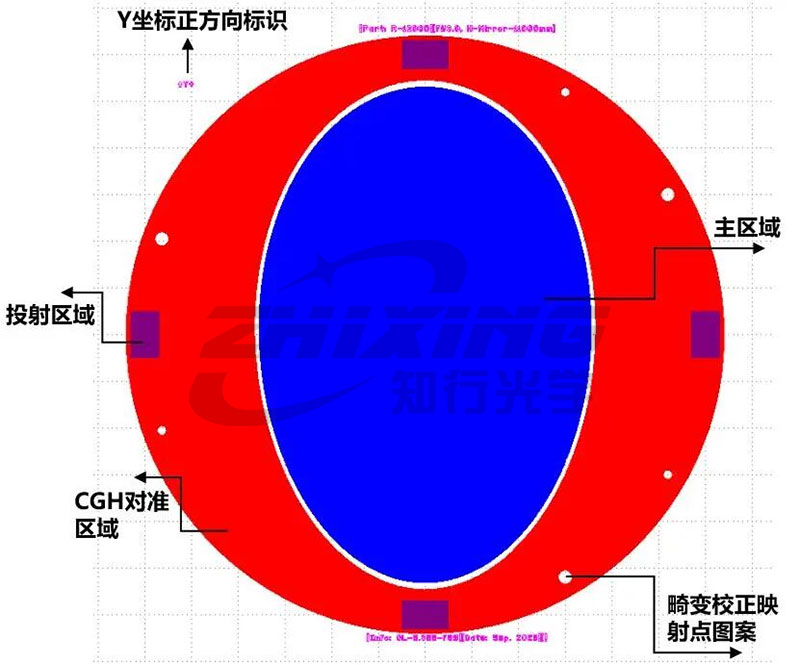
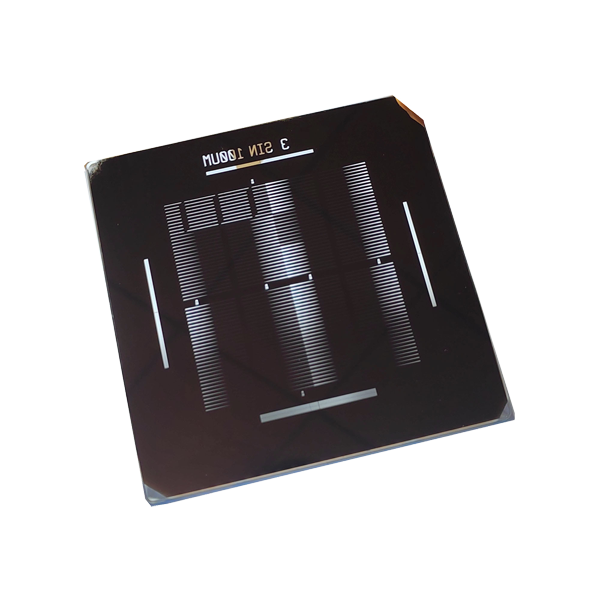
CGH Overall Layout Diagram
IV. The Dual Battle of Efficiency and Precision: How Big is the Difference Between Doing and Not Doing Calibration?
V. Choose High-Quality CGHs to Ensure Every Polishing Step is Effective
The next phase of precision optical manufacturing is about absolute precision, but even more importantly, about controlling waste rates and production efficiency.
As your CGH customization expert, every CGH we deliver not only boasts micro-nano level pattern quality but also comes standard with a high-precision, high-efficiency distortion correction solution. We use technological innovation to simplify processes and enhance precision in your workshop.
Reject ineffective polishing and say goodbye to processing deviations. Let us use truly precise and efficient "rulers" to safeguard your high-precision optical processing!