01 Wavefront Testing: Determining the System's Accuracy
Wavefront testing measures:
The degree to which the wavefront deviates from the ideal state after light passes through the system.
Common indicators include:
◆PV (Peak-to-Trough Value)
◆RMS (Root Mean Square)
◆Zernike Aberration Analysis
It helps determine:
◆Spherical Aberration
◆Coma
◆Astigmatism
◆Assemblage/Adjustment Deviation
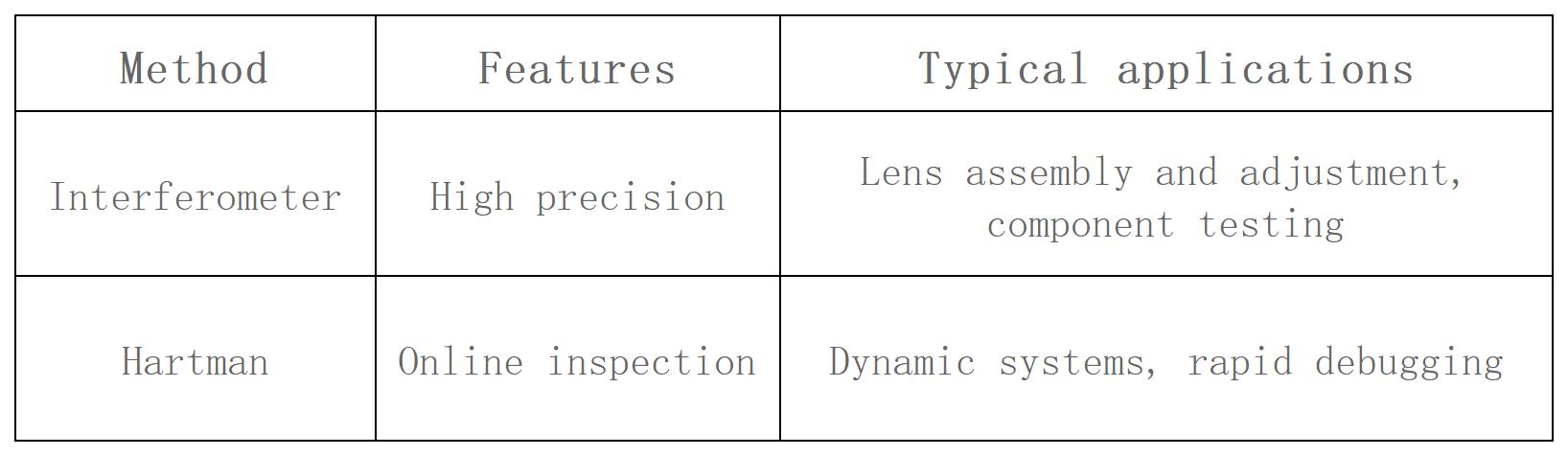
Common Testing Methods
02 MTF Test: Seeing if the System Can Ultimately "See Clearly"
MTF (Modulation Transfer Function) describes:
The system's ability to retain image details and contrast.
A higher MTF indicates a clearer image.
Compared to the wavefront, MTF more closely approximates the final result seen by the customer.
Common MTF Testing Methods
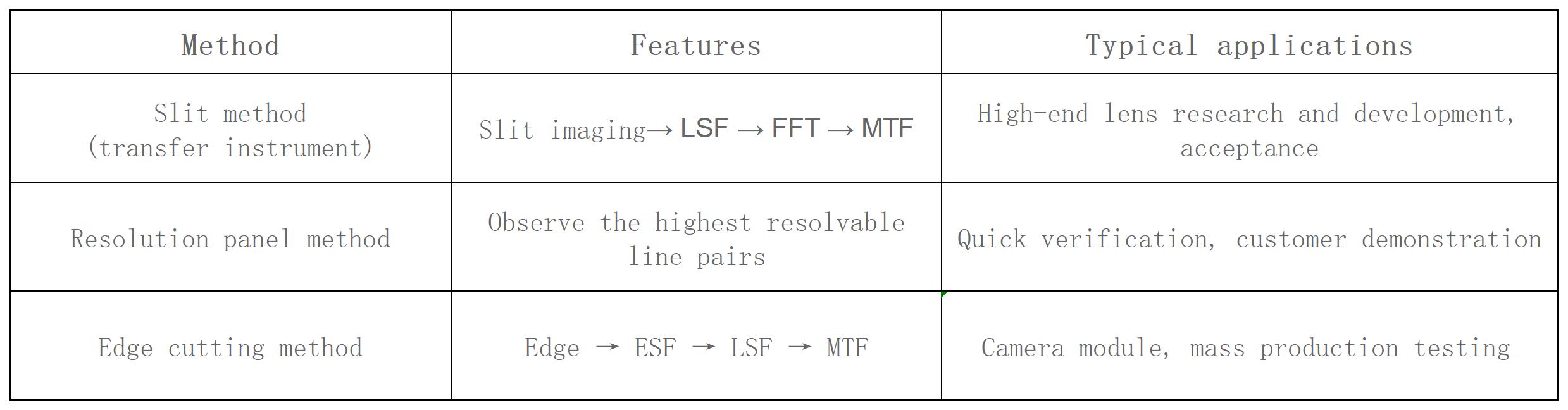
Among them, the Trioptics system, commonly referred to in the industry, typically belongs to the Slit Scan Method, which is currently one of the standard methods for testing high-end lenses.
03 Wavefront vs. MTF: What are the differences?

In short:
Wavefront tells you "why it's unclear"; MTF tells you "whether it's clear or not."
04 Can the two be converted to each other?
Theoretically, yes, because: Wavefront → PSF → MTF, meaning wavefront data can be used to derive the theoretical MTF.
However, in reality: the actual MTF is also affected by the following:
◆CCD/CMOS pixel size
◆Sampling frequency
◆Microlens structure
◆Assembly and adjustment errors
◆Electronic noise
Therefore: Wavefront data provides theoretical performance; MTF measures the actual system performance.
05 When to measure the wavefront? When to measure the MTF?
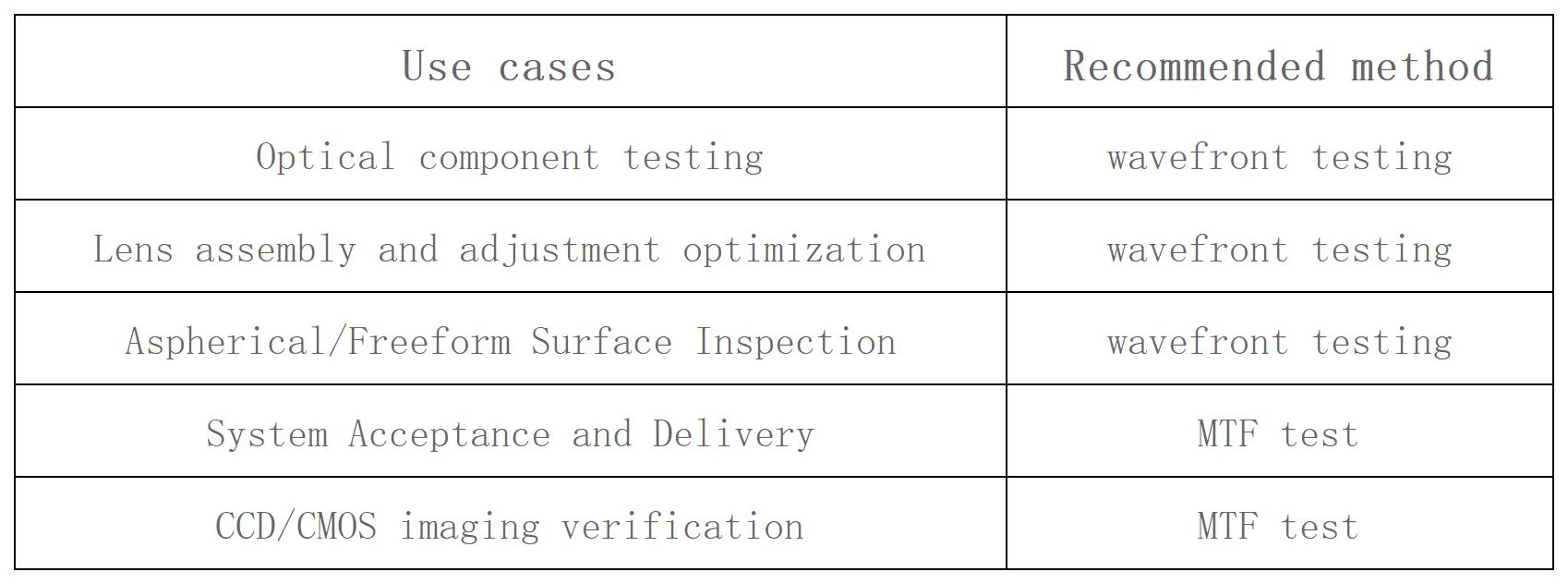
Best practice typically involves first optimizing the system using wavefront testing, then validating the results using MTF (Mean Transform Factor).
Conclusion
Wavefront testing and MTF testing are not substitutes, but rather complementary.
Wavefront testing is a diagnostic tool; MTF is the final answer.
A truly comprehensive system quality evaluation requires the combination of both.
Only in this way can we truly achieve:
From "theoretically excellent" to "practically clear understanding."