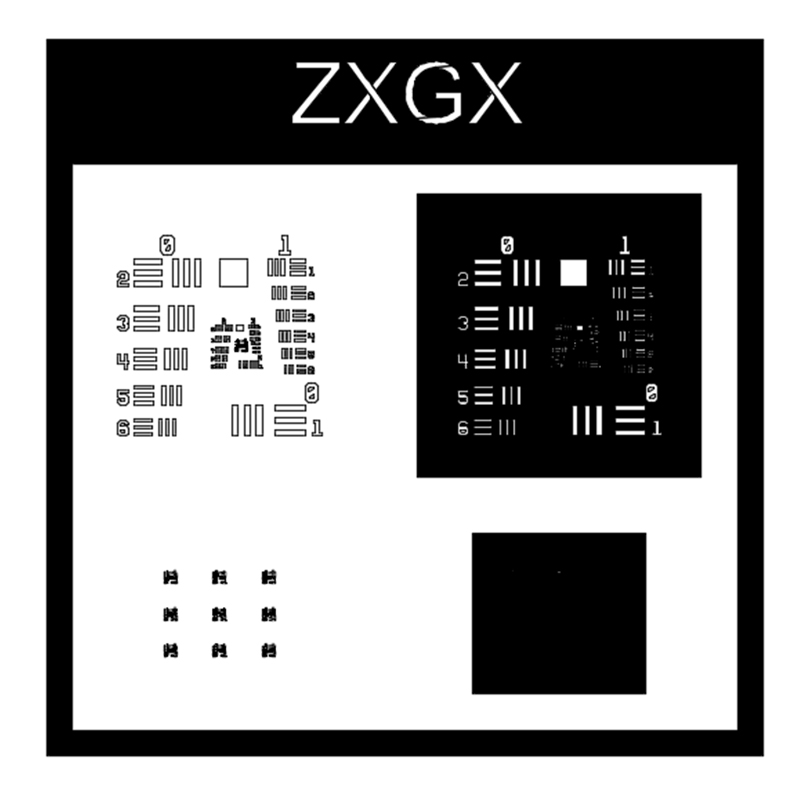
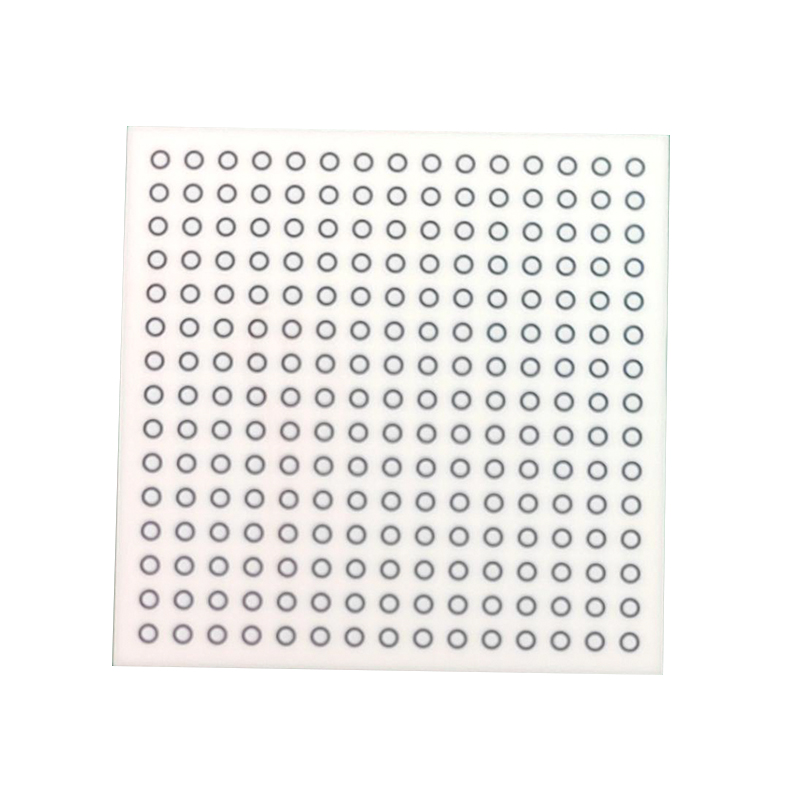
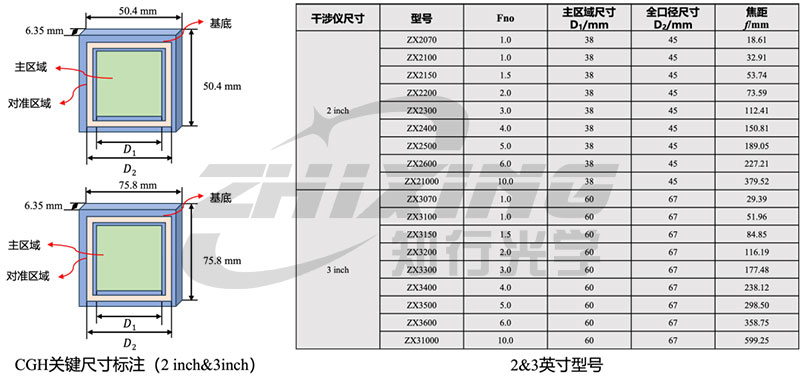
01 What is the US Army Standard Resolution Target? The US Army Standard Resolution Target (USAF 1951 Resolution Target) is one of the most widely used standard resolution testing tools in the optical industry. It uses a standardized arrangement of black and white lines to help determine the smallest detail a lens can resolve.
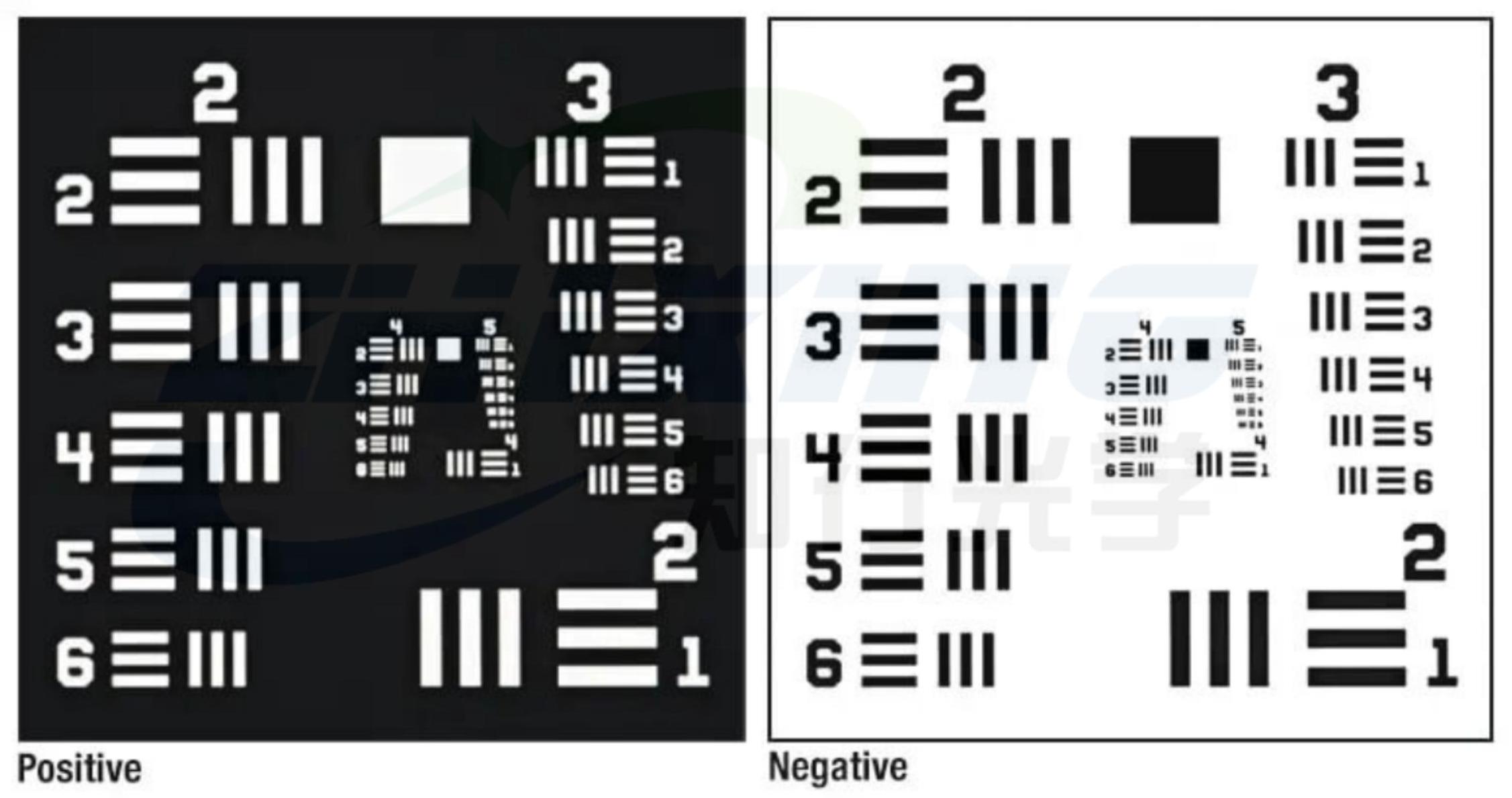
In simple terms: the number of lines a lens can clearly separate represents its resolving power. Because the testing method is intuitive and standardized, the US military standard resolution test board has long been used for:
◆ Optical lens R&D verification
◆ Lens factory performance testing
◆ Imaging system resolution evaluation
◆ Optoelectronic equipment calibration and acceptance. For high-end lenses, it has become an indispensable testing standard.
02 Why can't we rely solely on wavefront testing? Wavefront testing can assess the optical quality of the lens itself, such as:
◆ Surface shape error
◆ Aberration control
◆ RMS/PV index.
However, in real-world applications, the final impact on imaging performance also includes:
◆ CCD/CMOS pixel size matching
◆ Sensor packaging error
◆ System assembly accuracy
◆ Actual focusing state.
In other words, wavefront testing measures the lens itself, while US military standard testing verifies the entire optoelectronic system. What customers ultimately care about is not the lens's theoretical parameters, but whether the system can truly resolve target details. This is precisely why US military standard testing is irreplaceable.
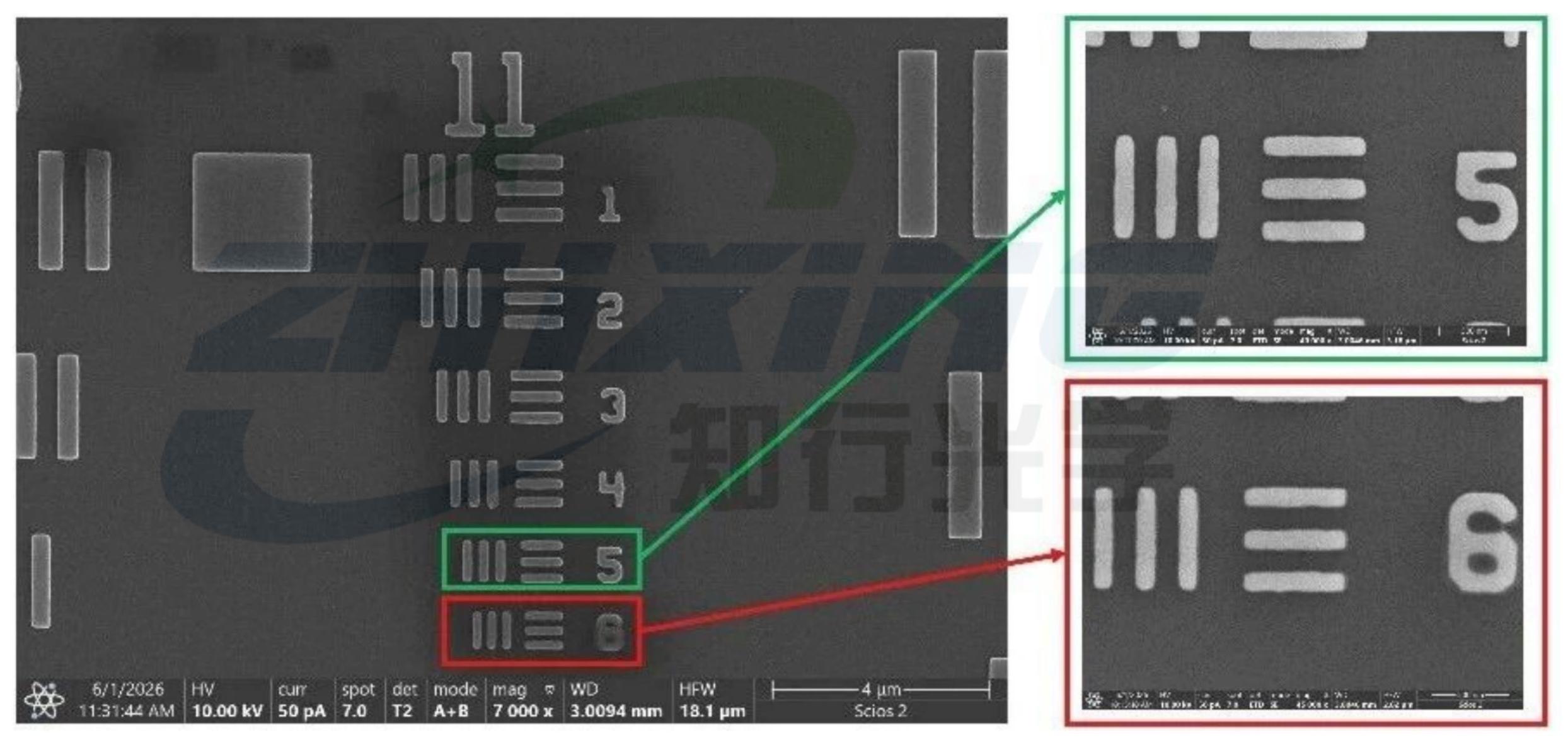
03. USAF Group 11: Challenging the Limits of 3500 Line Pairs. To meet the testing needs of ultra-high resolution lenses, Ningbo Zhixing Optics has launched the USAF Group 11 ultra-high resolution test target, supporting up to 3500 line pairs/mm. This means that the minimum linewidth is close to 140 nm. This size is approaching the scale of semiconductor micro-nano manufacturing. The real challenge is not just "creating" the image, but ensuring its sufficient precision. This includes:
◆ Extremely high linewidth control precision
◆ Clear and sharp edge quality
◆ Stable and reliable contrast performance
◆ Full-page image consistency control.
Because: the test target itself must be more precise than the lens being tested for the test results to be meaningful.
04 Why are high-end lenses increasingly reliant on US Military Standard 11-Set Test Targets?
As lens resolution capabilities continue to improve, traditional low-magnification test targets are no longer sufficient for verification needs.
Especially in the following application scenarios:
◆Semiconductor wafer inspection
◆AOI (Automated Optical Inspection)
◆High-pixel industrial vision systems
◆Research-grade microscopic imaging equipment
The system's ability to identify smaller defects and reconstruct finer structures often depends on:
The system's resolution under real-world conditions.
High-precision US Military Standard 11-Set test targets are crucial tools for verifying this capability.
05 A Reliable Test Target Determines Test Credibility
Many people focus on lenses but easily overlook the testing standards themselves.
In fact: Only a sufficiently precise resolution chart can truly measure the lens's ultimate performance.
Ningbo Zhixing Optics specializes in ultra-precision micro/nano structure manufacturing, providing high-quality:
◆US Military Standard Resolution Chart
◆Ultra-high line-pair test targets
◆High-precision customized test patterns
Providing more reliable resolution verification support for high-end optical systems.
As lens performance approaches its limits, testing standards must also be upgraded accordingly.
The U.S. military standard 11 sets (3500 line pairs) of ultra-high resolution test targets is not just a testing tool, but also a key verification standard connecting "theoretical excellence" and "real-world clarity".