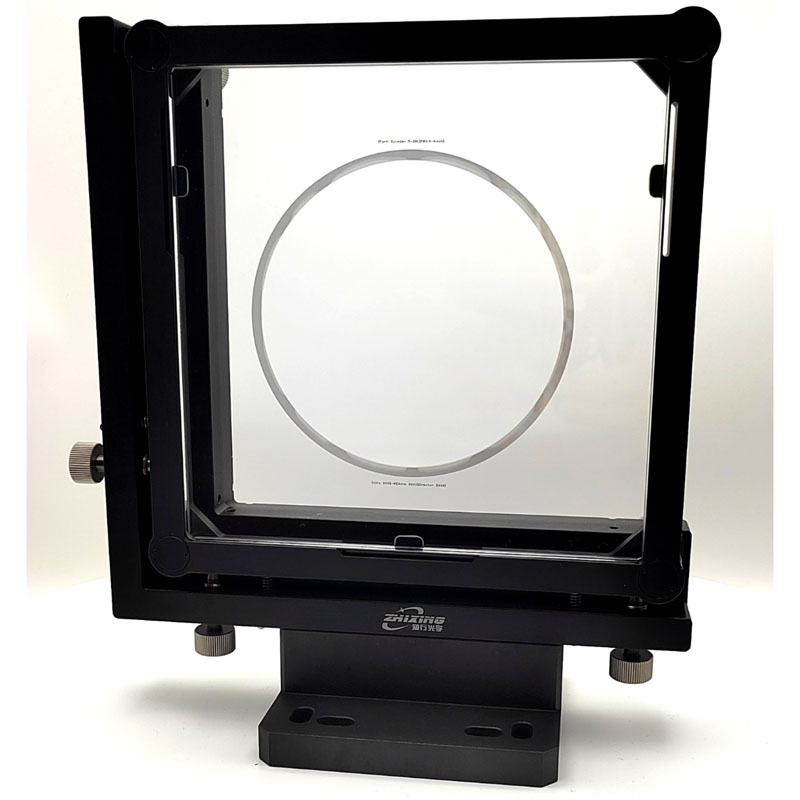
I. Cylindrical CGH Selection: Focus on 3 Core Variables Before selection, it is necessary to extract 3 sets of key parameters for the cylindrical lens to be tested. Parameter pre-screening can be completed using the selection plugin on the Ningbo Zhixing Optics website. (https://www.zhixingoptics.com/xuanxing)
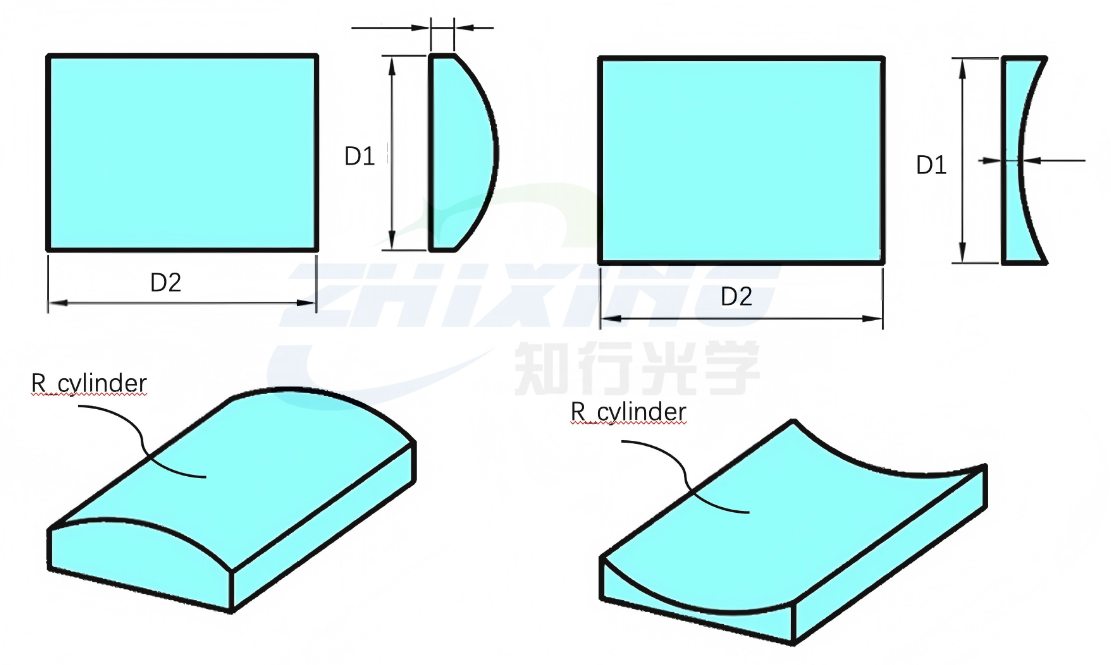
Figure 1: Schematic diagram of the cylindrical mirror under test
1. Radius of curvature R of the cylindrical mirror under test: A cylindrical mirror exhibits curvature in a specific direction, and R is the radius of curvature in that direction. This parameter is used as the basic input for both concave and convex cylindrical surfaces. Note: The radius of curvature R is a core parameter for subsequent calculations of Fno and for verifying the optical path geometry of convex cylindrical surfaces. When testing convex cylindrical surfaces, R also needs to be compared with the CGH focal length for verification.
2. Fno (F-number) of the cylindrical mirror under test: Definition of Fno: Fno = R/D₁ - R: Radius of curvature of the cylindrical surface under test; - D₁: Effective aperture in the curvature direction.
3. Generatrix length D₂ of the cylindrical mirror under test: The generatrix is the direction in which the cylindrical mirror extends in a straight line, and D₂ is the effective aperture length on the generatrix; the direction perpendicular to the generatrix is the aperture D₁ in the curvature direction. Note that a cylindrical mirror has two orthogonal directions: - Curvature direction: The direction that produces the curvature, corresponding to the aperture D₁; - Generatrix direction: The direction in which the cylinder remains straight, without curvature.
II. Selection Criteria for Concave Cylindrical Lenses (CGHs) To perform zero-point detection, the concave cylindrical surface is placed in the diverging cylindrical wave region after the CGH focal point. Two conditions must be met simultaneously:
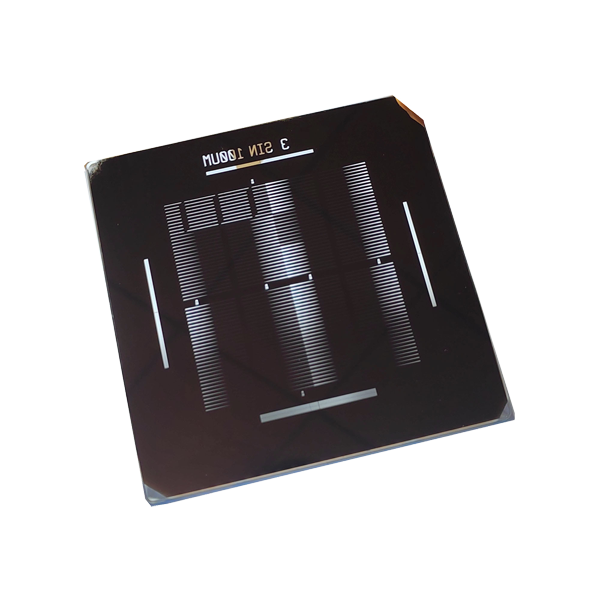
✅ Condition 1: The generatrix length D₂ of the cylinder to be measured < the effective pattern generatrix length of the cylindrical CGH. For example, the generatrix length of Zhixing Optics' 3-inch CGH is 60 mm. If the cylindrical lens size is 70 mm, the generatrix length is too long and the 3-inch lens cannot cover it, requiring a larger CGH.
✅ Condition 2: The CGH Fno < the concave cylindrical surface Fno> ensures complete coverage of the wavefront in the curvature direction, preventing aperture truncation.
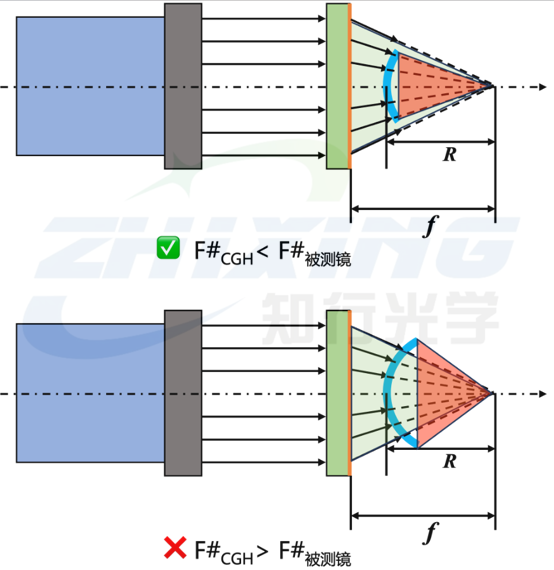
Figure 2: Test results of concave cylindrical mirror
💡Summary: Concave cylindrical mirror selection is relatively user-friendly. Labs typically stock small, medium, and large Fno series cylindrical CGH mirrors, which should cover most concave cylindrical mirror testing needs.
III. Selection Criteria for Convex Cylindrical Mirrors (CGH) The optical path for convex cylindrical mirror testing is completely different from that for concave cylindrical mirrors. The element under test (DUT) needs to be placed in the converging wavefront region between the CGH and its focal point to ensure that the CGH focal point coincides with the focal point of the convex cylindrical mirror under test. This imposes more constraints, requiring all four conditions to be met simultaneously:
✅ Condition 1: The generatrix length D₂ of the cylindrical mirror under test < the effective pattern generatrix length of the cylindrical CGH.
✅ Condition 2: The Fno of the convex cylindrical mirror under test > the Fno of the cylindrical CGH, ensuring complete wavefront coverage in the curvature direction.
✅ Condition 3: The focal length f of the cylindrical CGH > the radius of curvature R of the convex cylindrical mirror under test. Principle: The convex cylindrical mirror must be placed between the CGH and the focal point, with the distance between the mirror under test and the focal point equal to R. If the focal length of the CGH is less than R, the mirror under test will be outside the focal point, making it geometrically impossible to place and thus preventing zero-position detection.
✅Condition 4: Safe operating space reserved during actual on-site testing > During actual on-site testing, it is necessary to reserve operating space for debugging and alignment. In order to avoid physical collision and squeezing damage to the lens between the cylindrical mirror and the CGH, the generatrix length and light transmission size of the cylindrical mirror to be tested should be more than 10mm smaller than the effective pattern size of the CGH when selecting the model, so as to ensure the safety of the testing operation and the smooth debugging of the optical path.
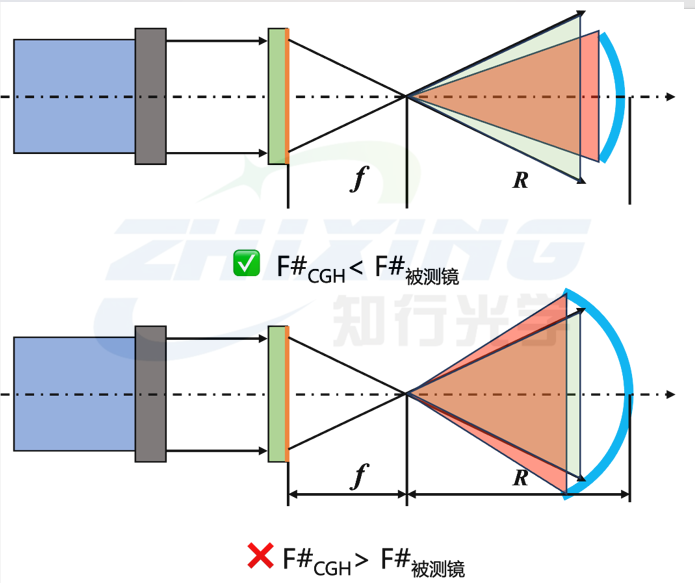
Figure 3: Test results of the convex cylindrical mirror
⚠️Important Reminder: Convex cylindrical lenses must simultaneously meet multiple constraints: the lens under test (Fno) > CGH - Fno; the CGH focal length > the radius of curvature (R) under test; and the lens size under test must have a safety margin of at least 10 mm relative to the CGH. For cylindrical CGHs, due to the direct proportional relationship between R and Fno, a smaller Fno corresponds to a smaller focal length. With the added hard condition that "the CGH focal length must be greater than the radius of curvature (R) under test," the range of compatible CGHs for large-radius, small-Fno convex cylindrical lenses is significantly compressed, resulting in a very narrow selection space. For example, for a convex cylindrical lens with R=120mm, D₁=80mm, and D₂=50mm, after using selection tools, the selectable cylindrical lens range is 6 inches with Fno 1.11-1.4, which cannot be covered by standard products F1 (ZX6100) and F1.5 (ZX6150).
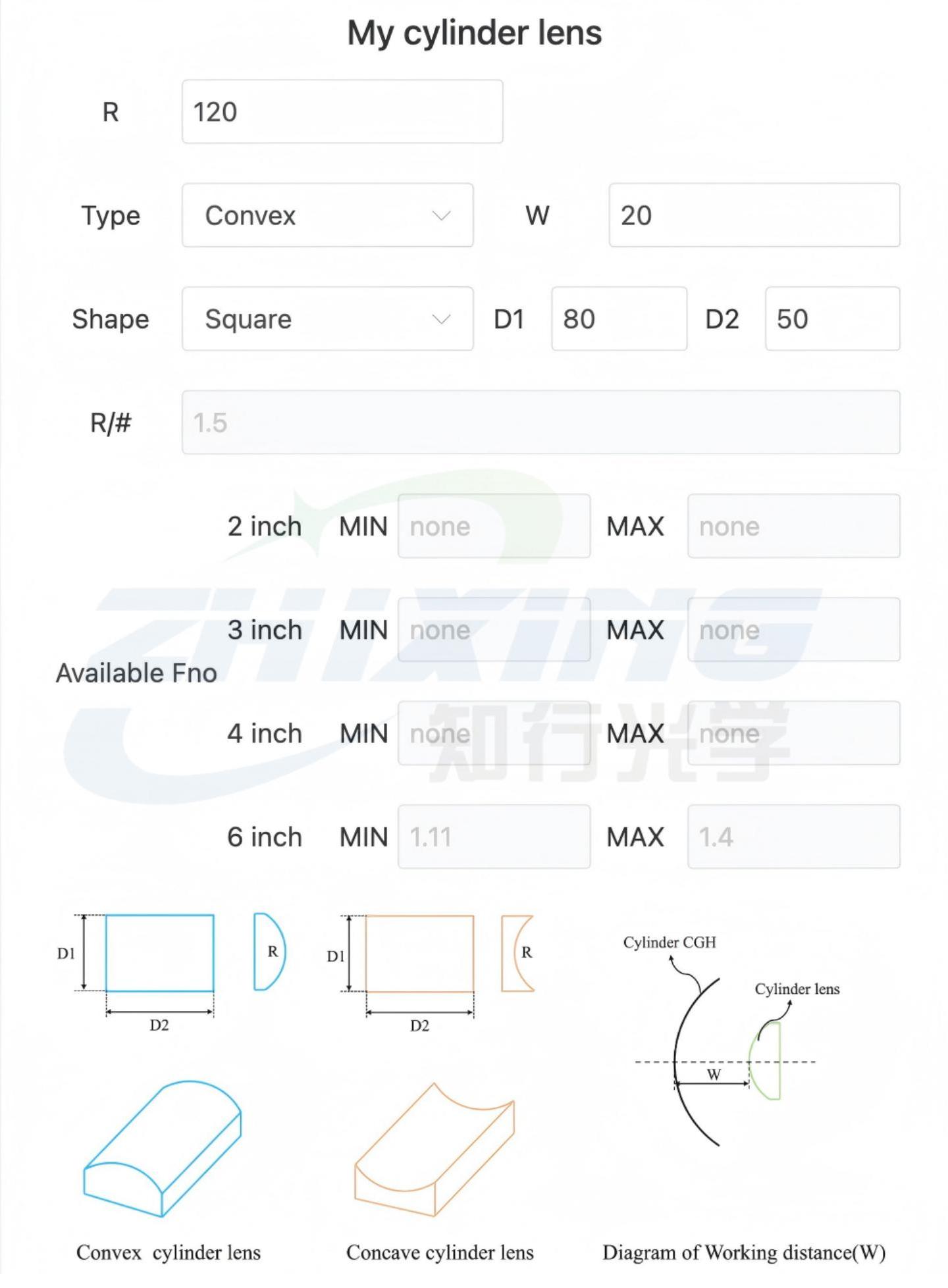 Figure 4: Case study of cylindrical surface selection (R=120mm, D₁=80mm, D₂=50mm)
If only the Fno condition is met, but the CGH focal length is less than R, even if wavefront coverage is not a problem, the optical path cannot be physically placed, and measurement is still impossible. Furthermore, if no safety clearance is reserved in the dimensions, there is a risk of lens collision damage. Therefore, to cover the testing of various convex cylindrical surfaces, the laboratory needs to be equipped with a complete set of cylindrical CGHs with different focal lengths and Fno, while strictly controlling the size safety clearance, balancing testing accuracy and operational safety.
IV. Selection Summary
1. Concave cylindrical lenses only need to meet two conditions: generatrix length and Fno matching, making selection relatively easy; having a stock of small, medium, and large Fno series CGHs is sufficient to cover most concave cylindrical surface testing tasks.
2. Convex cylindrical lenses need to simultaneously meet four conditions: generatrix size coverage, Fno matching, CGH focal length > the measured R, and a reserved safety clearance. The number of CGHs that can be matched with large R and small Fno convex cylindrical surfaces is very limited; geometric and dimensional verification must be performed in the early stages, and the Fno parameter alone is insufficient. Practical advice: Prioritize using Zhixing Optics' online selection tool for pre-screening; for convex cylindrical surfaces, be sure to check the CGH focal length, not just compare the Fno; after obtaining the candidate CGH, recalculate the optical path geometry distance and strictly reserve a safety gap of more than 10mm to eliminate the risk of lens collision.