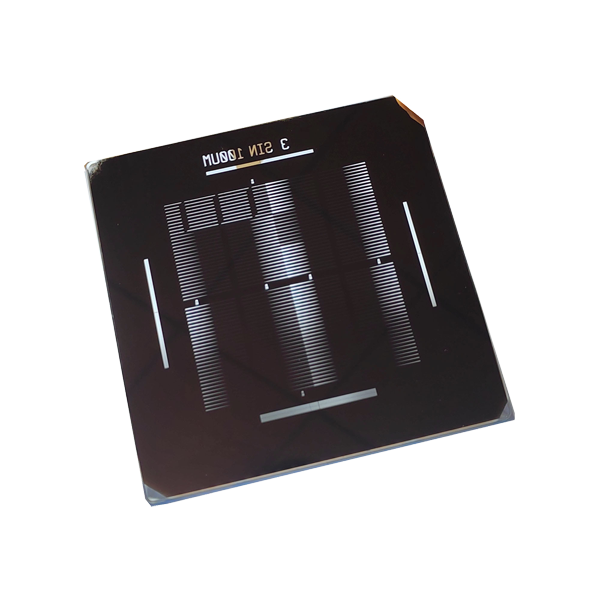
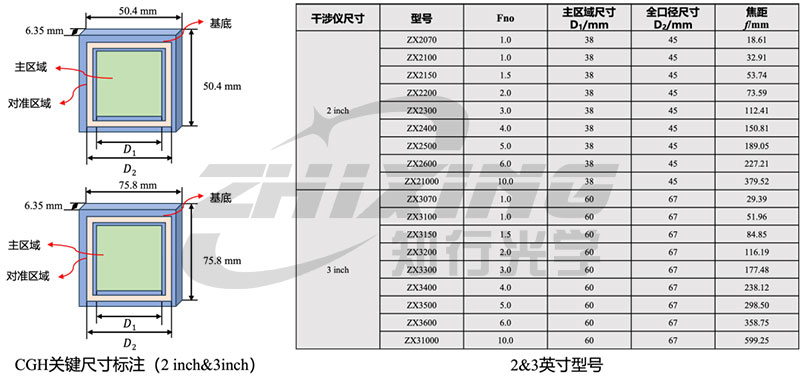
In the field of precision optical manufacturing, even the slightest error can lead to disastrous consequences. We relentlessly pursue nanometer-level precision every day. But in the machining of aspherical or freeform surfaces, have you ever encountered this dilemma: despite using extremely precise polishing machines and repeatedly optimizing process parameters, the surface shape error remains stubbornly high? Even on some high-order curved surfaces, the more you polish, the more bizarre the shape becomes? The problem may not lie in your polishing process, but in your "eyes"—the inspection system. More precisely: have you rigorously corrected the distortion of the core component for aspherical zero-point testing—the CGH (Computer Hologram)? If this step is neglected, the inspection data itself is skewed, and subsequent precision machining will naturally continue to "go astray."
How can you measure what you can't see? Zhixing Optics' dual-wavelength CGH solution not only illuminates the infrared "visual blind spot," but also deeply evaluates the impact of material properties on high-reliability loads through transmission wavefront detection.
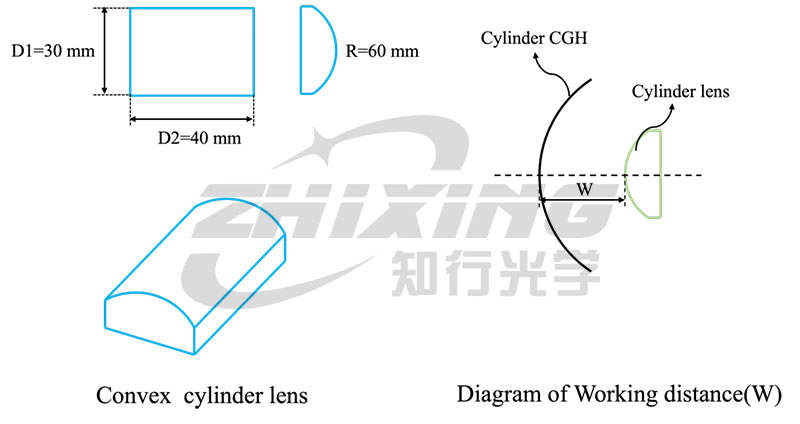
In the landscape of modern precision optical manufacturing, cylindrical lenses play a crucial role. From cutting-edge laser shaping in laboratories to LiDAR in industrial production lines, from barcode scanning equipment to high-precision semiconductor wafer inspection systems, cylindrical lenses, with their unique "one-dimensional focusing" characteristics, have become core components for shaping coherent light sources and correcting light spot shapes. It can be said that the precision of a cylindrical lens directly determines the "vision" of high-end equipment. However, how to accurately measure this "ruler" has long been a difficult problem for optical engineers.
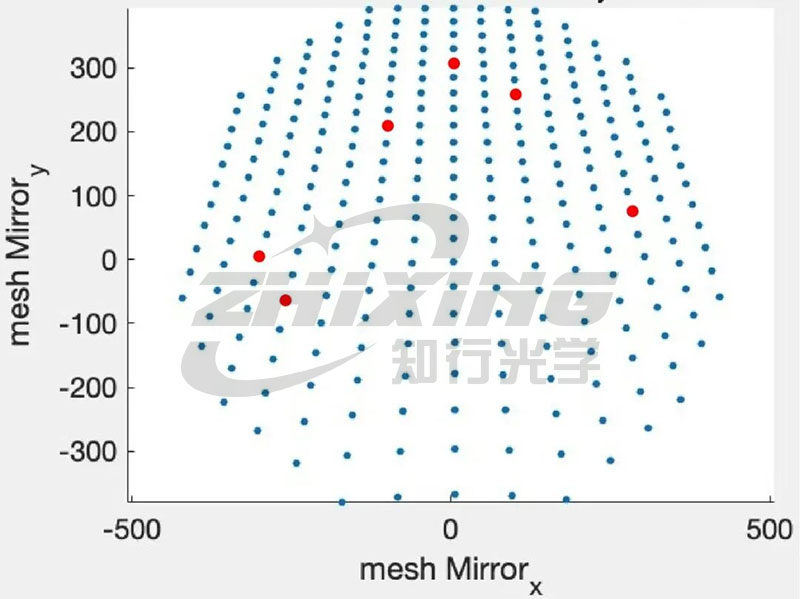
In today's booming commercial space industry, the speed of satellite constellation deployment has become a lifeline for enterprises. As the preferred choice for high-resolution space remote sensing payloads, off-axis three-mirror array (TMA) systems are being widely adopted due to their advantages such as unobstructed views, long focal length, and high imaging quality. However, while providing superior performance, off-axis TMA systems also present significant challenges to backend assembly. With increasingly tight project cycles and a surge in launch missions, the traditional "experience-driven" assembly and commissioning model is becoming a serious bottleneck restricting production capacity.
We use cookies to offer you a better browsing experience, analyze site traffic and personalize content. By using this site, you agree to our use of cookies. Privacy Policy

 11 2026-06
  10 2026-06
  08 2026-06
  05 2026-06